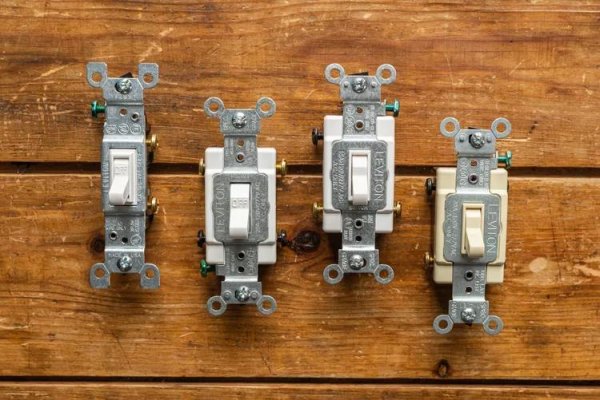
When it comes to home electrical systems, the humble light switch is an often-overlooked but essential component. With a wide array of types available, selecting the right one can be more complex than it seems. This guide covers the most common switch varieties, their typical applications, and what to consider when making a replacement, ensuring you choose a switch that fits both your functional and aesthetic needs.
Light switches are broadly categorized by their mechanism and the number of control points they offer. The most familiar are the toggle and rocker styles, which are easily interchangeable and dominate residential settings. Toggle switches feature a simple lever that flips up or down, while rocker switches use a broader, flatter surface that you press on the top or bottom. Both are straightforward to operate and are widely available.
For more specialized control, slider and push-button switches are common. Slider switches have a small knob that moves along a track, typically used to adjust the brightness of dimmable lights. Push-button switches operate with a simple press, and some models include a rotary dial for dimming. These are often found in dimmer switches or specialty lighting setups.
Common Switch Types and Their Best Uses
The single-pole switch is the workhorse of residential wiring, controlling a light fixture, appliance, or outlet from one location. It's easily identifiable by the ON/OFF markings on its face and has two brass screw terminals plus a green grounding screw. This switch is used throughout homes for bedroom, bathroom, and kitchen lights, as well as wall outlets.
For controlling a 240-volt appliance like an electric water heater or air conditioner, a double-pole switch is the appropriate choice. Though more common in industrial settings, these switches have four brass terminals to handle two hot wires and a green grounding screw. They are designed for larger appliances that require a dedicated circuit.
When you need to control a single light from two different locations, such as the top and bottom of a staircase, a three-way switch is required. These switches have three terminal screws plus a ground, allowing them to connect to the electrical panel, a second three-way switch, and the light fixture. They are standard in hallways, garages with two entries, and basements.
For control from three or more locations, a four-way switch is used in conjunction with three-way switches. These are less common but are found in long hallways or rooms with multiple entrances. A four-way switch has four terminals plus a ground and acts as a relay for the traveler wires between three-way switches. Replacing one requires caution, as terminal layouts can vary by manufacturer.
Advanced and Specialty Switches
Smart switches have gained popularity for their ability to control lighting and appliances remotely via an app or voice assistant like Alexa. They can be programmed to turn lights on or off automatically. However, most require a neutral wire connection and a stable internet connection, so a circuit upgrade may be necessary. Always ensure compatibility with your existing smart home hub or voice system.
Dimmer switches allow you to adjust light intensity, creating ambiance and saving energy. They come in rotary and sliding styles, with some models featuring a toggle for on/off and a separate slider for brightness. Installing a dimmer can be a simple way to enhance a room's atmosphere.
Motion sensor switches, also known as occupancy or vacancy switches, automatically turn lights on when they detect movement and off after a preset time. They are common in public bathrooms, outdoor areas, and can also be used with exhaust fans. Some models include daylight detection to prevent unnecessary activation.
Specialty switches include timer switches, which can be set to turn lights on and off at specific times, ideal for outdoor lighting. Time-delay switches keep a light on for a set period before shutting off. There are also touch switches and switches designed specifically for LED and CFL bulbs, which may be required for dimmable energy-saving lights.
Combination switches combine two functions in one unit, such as a light switch with an outlet or two separate switches. These are useful for saving space and are increasingly popular with the addition of USB charging ports. Pull chain switches are common for ceiling fans and overhead lights, often found in garages and workshops. Double-light and triple-light switches control two or three lights independently from a single location, and should not be confused with three-way switches.
Finally, photocell switches automatically turn lights on or off based on ambient light levels, making them ideal for outdoor lighting. They work by adjusting resistance in the circuit according to the light they sense.
When choosing a light switch, consider the specific function you need. For example, a three-way or four-way switch is necessary for multi-location control, while a motion sensor or smart switch can help reduce energy costs. Always turn off the power and use a voltage tester before attempting any replacement, and ensure any new switch is compatible with your wiring and bulbs.
Comments 0