Home Wiring Essentials: Sizing, Safety, and Code Basics
Understanding home electrical wiring requires knowledge of wire sizing, sheathing colors, safety protocols, and box fill limits. This guide breaks down the essentials for DIYers, from selecting the correct AWG to recognizing when to call a licensed electrician.
When tackling home electrical projects, the difference between a safe installation and a hazardous one often comes down to understanding wire sizing, sheathing, and the rules that govern electrical boxes. The American Wire Gauge (AWG) system is the backbone of wire selection, linking the physical thickness of a conductor to the maximum current it can safely carry. For instance, a 14-gauge wire is rated for 15 amps, while a 12-gauge wire handles 20 amps, and a 10-gauge wire supports 30 amps. Mismatching these ratings to a circuit's amperage can lead to overheating, short circuits, and even electrical fires, according to the CK-12 Foundation.
Most interior residential wiring relies on non-metallic (NM) cable, commonly known by the brand name Romex. This cable consists of three or more wires encased in a flexible plastic sheath. The sheath's color provides a quick visual cue: white indicates 14-gauge wires for 15-amp circuits, yellow for 12-gauge wires on 20-amp circuits, orange for 10-gauge wires on 30-amp circuits, and black for heavier gauges used in 40- to 60-amp applications. Recognizing these colors helps DIYers quickly identify the right cable for a project.

Safety remains paramount when working with electricity. The U.S. Department of Energy's Berkeley Laboratory outlines four core principles: work only on dead equipment, lock out power sources to prevent accidental energization, test wires with a voltage tester or multimeter before touching them, and know your limits—if uncertain, hire a certified electrician. These steps are non-negotiable, even for experienced hobbyists.
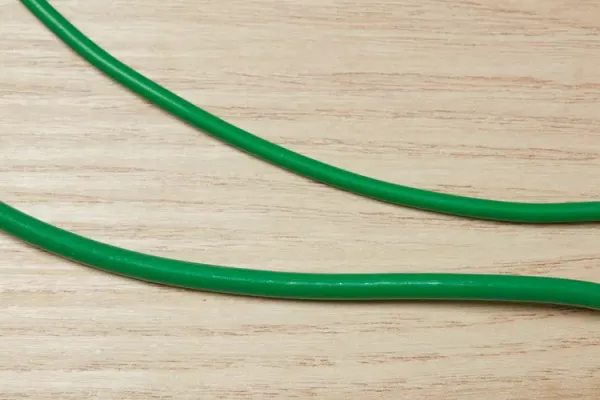
Beyond sheathing, individual wire colors serve distinct roles. Black and red wires typically carry current (hot), white wires serve as grounded neutrals, and green or bare copper wires are for grounding. Reading the labels printed on cable sheathing is equally important; these markings detail wire size, material, insulation type, and the number of conductors inside, ensuring you purchase the correct product for your needs.

Outdoor and Underground Wiring
Standard NM cable is designed for dry, protected indoor spaces. For outdoor or underground runs, direct-burial cable is required. This cable embeds individual conductors in solid vinyl, shielding them from moisture. Local building codes dictate whether conduit is necessary, so checking with your jurisdiction is essential before digging.
Stripping wire is a fundamental skill that demands a dedicated tool and a steady hand. Removing the plastic insulation without nicking the metal core is critical, as damage can compromise the connection and create a future hazard.

Box Fill Capacity and Panel Basics
Electrical boxes have a strict fill capacity, determined by box volume, wire gauge, and the number of devices installed. The National Electrical Code (NEC) specifies the free space required per conductor: for example, a 14-gauge wire needs 2 cubic inches, a 12-gauge needs 2.25 cubic inches, and a 10-gauge needs 2.5 cubic inches. To calculate, divide the box's volume (printed on the box) by the wire's requirement, and subtract two wires for each device. For instance, an 18-cubic-inch junction box can hold nine 14-gauge wires, but if it contains an outlet, that number drops to seven.
While wiring a service panel is strictly a licensed electrician's job, understanding its role helps homeowners appreciate the system. The panel distributes power to individual circuits and houses breakers or fuses that protect against overloads. Similarly, a disconnect switch, often mounted near the electric meter, provides a means to shut off power from outside the home—a feature not present in all residences and one that also requires professional installation.

For those planning DIY electrical work, the takeaway is clear: respect the system's rules, use the correct materials, and never hesitate to call a professional when the task exceeds your comfort or expertise. The cost of a licensed electrician is far lower than the price of a fire or an injury.
Comments 0