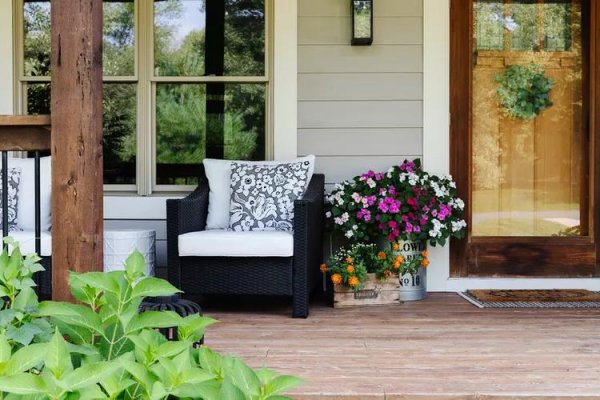
Using interior paint on the outside of a home is a common DIY mistake, but it's one that can lead to cracking, fading, and peeling. Paint experts from two major brands explain why interior formulations are not designed to withstand the elements and what homeowners should do if they've already made this error.
Mike Mundwiller, senior manager of end user product experience at Benjamin Moore, emphasizes that quality exterior paint undergoes rigorous testing against a wide range of conditions. "Quality exterior paint goes through a rigorous testing protocol against many different exposures," he says, including high-wind hurricane conditions, extreme temperatures, snow and ice, intense UV rays, and humidity. Interior paint, by contrast, is only tested for durability in controlled indoor environments.
Krystal Mindeck, director of product marketing at HGTV Home by Sherwin-Williams, echoes this sentiment. "Interior paint formulations prioritize everyday durability against chips and wear-and-tear but only within weather-controlled environments," she explains. "Exterior formulations have additives and resins to withstand outdoor conditions."
No Exceptions for Outdoor Furniture
Even painting outdoor furniture, such as deck chairs or wooden planters, with interior paint is not recommended. Mundwiller and Mindeck agree that even minimal exposure to weather and temperature changes can damage the coating, regardless of using furniture covers or storing items indoors during extreme weather. This rule also applies to primers—interior primers should not be used outdoors.
However, there are paints specifically formulated for both interior and exterior use, typically door and trim paints. Major brands like Behr, HGTV Home by Sherwin-Williams, Glidden, and Valspar offer such products. Consumers should verify that the label specifies exterior use, as many door and trim paints are only for interior applications.
Correcting the Mistake
If interior paint has already been applied outdoors, the first step is to assess the damage. Mindeck suggests scraping or sanding the paint off the surface before applying a proper exterior primer and paint. A paint stripper can speed up the process.
However, Mundwiller notes that removal might not always be necessary. "If the interior paint hasn't been on the surface for a long time and both the interior paint and substrate are sound and clean, it could be a situation of simply repainting with a quality exterior coating," he says.
The Reverse Risk: Exterior Paint Indoors
The reverse—using exterior paint indoors—is equally problematic. Exterior paints contain additives and resins that resist weather, but these often include high levels of volatile organic compounds (VOCs), making them unsafe for indoor use. Only paints explicitly labeled for both interior and exterior applications should be used inside.
For those considering exterior paint on indoor furniture or cabinetry to improve durability, experts advise against it. Instead, they recommend specially formulated paints for cabinets, furniture, and crafts, many of which include a built-in primer, simplifying the project.
In summary, the choice of paint is critical to the longevity and safety of any painting project. Always read the label and select a product designed for the specific environment and surface.
Comments 0