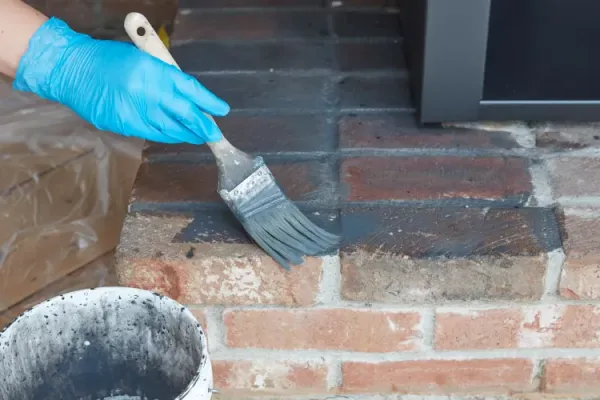
Homeowners looking to refresh worn brick surfaces without the permanence of paint often turn to staining, a technique that penetrates the porous material to deepen its natural color while preserving its texture and breathability. According to The Spruce, a typical brick staining project takes 2 to 4 hours of active work, with a total time of 1 to 2 days, and costs between $50 and $100 for a fireplace or small wall.
Unlike paint, which forms a thick, opaque layer that seals the brick's pores, stain soaks into the surface, allowing the material to breathe. This distinction is critical for those concerned about moisture buildup or long-term durability. Staining also avoids the chipping and peeling that can affect painted brick, but it cannot repair heavily damaged surfaces. It can only shift the color from lighter to darker shades, deepening both the light and dark areas proportionally.
Stain vs. Paint: Key Differences
The choice between staining and painting ultimately depends on the desired finish. Staining keeps the brick's natural color variations visible, creating a transparent, thin layer that leaves pores open and patches visible. Painting, on the other hand, covers the entire surface—including mortar—with an opaque, thick layer that seals pores and hides imperfections. Painted brick is removable, though with difficulty, and can be applied over stained brick. Stained brick, however, cannot be removed and cannot be applied to previously painted surfaces.
For those who prefer a solid, paint-like cover-up, an opaque stain is recommended. A semi-transparent stain preserves more of the brick's natural appearance and texture.
Preparation and Application Steps
Before applying stain, it's essential to test the product on an inconspicuous area, such as the side of a fireplace apron or a corner of exterior siding. A simple water test determines whether a sealant is present: if water beads on the surface, a clear sealant exists and must be removed, as it will block stain penetration. For exterior brick, a pressure washer on a wide spray can remove sealant or moss, followed by gentle scrubbing with a metal brush for stubborn spots.
After cleaning, the brick must be scrubbed by hand with a nylon-bristle brush and a mild detergent or TSP in warm water, then rinsed and allowed to dry for a full day. Once dry, new drop cloths should be laid, and protective gear—including waterproof gloves, eye protection, and work clothing—is necessary. Practicing with clear water on the brick helps gauge the rate of stain absorption.
The stain pigment is mixed with water according to product instructions, ensuring all pigment dissolves to avoid clumps that can create dark spots. Application involves dipping a brush into the mix and running it across the brick in smooth, overlapping coats, being careful to apply evenly. Curing time varies with temperature, humidity, and airflow; in warm, dry, breezy conditions, the stain may feel dry almost immediately, while pooled areas could take a day or two. Excess pooled stain can be dabbed with a clean cotton rag.
Choosing the Right Stain and Maintenance Tips
When purchasing brick stain, buyers choose between water-based and oil-based formulas. Water-based stains are easier to apply and dry quickly, but their color is less vibrant. Oil-based stains require solvents for cleanup and are harder to apply, yet they last longer. For most projects, a water-based stain is often recommended because it is easy to use, breathes well, and is specifically formulated for brick, concrete, or masonry.
Practical tips from the original guide include adding more water for a lighter coat, starting with a lighter shade that can be darkened later, stirring frequently to keep pigment suspended, and applying less stain to mortar, which absorbs more than the brick itself. When staining flooring, plan a start and end point, and avoid walking over freshly stained areas.
Brick stain is suitable for both interior and exterior surfaces, though like any exterior coating, it is subject to UV fading and will deteriorate at the same rate as the brick. Once applied, the stain becomes part of the brick, so its lifespan matches that of the brick itself. The guide notes that staining generally makes brick darker, deepening the color of both lighter and darker areas proportionally.
Comments 0