When tackling a home repair or refinishing job, the type of sandpaper you pick can make the difference between a smooth, professional-looking finish and a surface that’s rough, scratched, or uneven. Sandpaper is graded by a number that indicates the size of its abrasive particles, and understanding that scale is key to choosing the right material for the task at hand.
Grit numbers range from #24, an extremely coarse paper used for heavy material removal, to #1,000, an ultra-fine grade that produces a nearly glass-like smoothness. Most household projects, however, fall within a narrower band, typically between #60 and #320. The number printed on the back of the paper tells you the coarseness: lower numbers mean larger, coarser particles, while higher numbers indicate finer abrasives.
How Grit Numbers Are Determined
Contrary to a common misconception, the grit number does not refer to the number of particles per square inch. Instead, it reflects the mesh count of the screens used during manufacturing to sift the abrasive grains. For example, in 60-grit sandpaper, the particles were passed through a screen with 60 holes per square inch. This standardized system helps ensure consistency across brands and types.
Choosing the right grit is a balancing act. Using paper that’s too coarse can leave deep scratches or remove fine detail on furniture, while too fine a grit can make sanding laborious and time-consuming. The goal is to start with a grit that removes material efficiently, then progress to finer grits as the surface nears completion, stopping when it feels smooth to the touch.
Matching Grit to Your Project
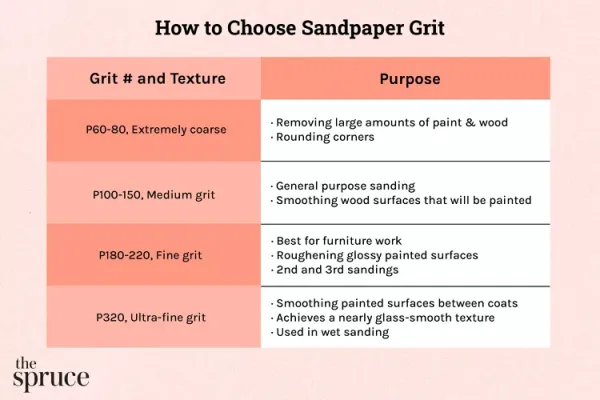
For heavy-duty tasks like stripping old paint or rounding sharp corners, coarse grits in the #60–#80 range are effective. They cut through finishes quickly but leave a rough texture, so they’re not suitable for delicate edges or thin veneers, which can be sanded through easily.
Medium grits, #100–#150, are the most versatile and commonly used. They work well on bare wood and allow you to adjust pressure to handle different materials. A final pass with #150 grit is often recommended before painting, as it leaves a slight tooth that helps paint adhere.
Fine grits, #180–#220, are typically used for second or third sandings, or to roughen glossy surfaces before another coat of paint. For bare wood that will be stained, it’s best not to go above #220, as finer sanding can burnish the surface and hinder stain absorption.
Ultra-fine grits, such as #320, are reserved for smoothing between coats of paint or for wet sanding, which creates a slurry that aids in polishing. They’re also used in the early stages of sanding solid surface countertops.
Cost and Availability
Sandpaper is an inexpensive supply, with multi-packs ranging from six to 24 sheets or more. Prices vary from about $2 to $25, depending on the number of sheets and whether the pack includes multiple grits. Sheets come in standard sizes, including full 9-by-11-inch sheets and smaller pads for detail sanders. You can find sandpaper at hardware stores, home improvement centers, big-box retailers, and online.
When buying, consider the surface you’re sanding and the finish you want—whether that’s smooth, polished, or textured. Having a range of grits on hand ensures you’re prepared for any project, from rough shaping to final finishing.
Comments 0