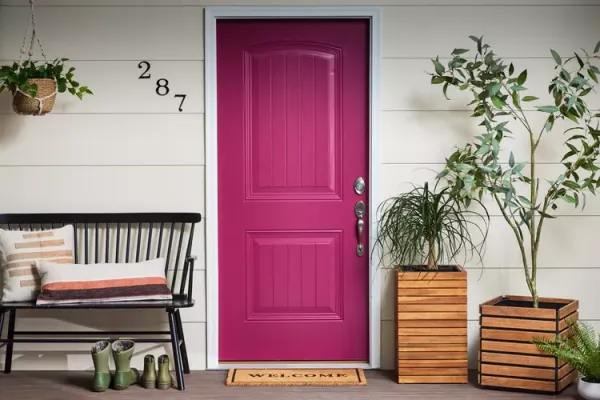
Homeowners looking to refresh their home's exterior often consider repainting their metal front door, a task that can be completed in a weekend with the right approach. The project typically takes 2 to 4 hours of active work, with a total time of 1 to 2 days allowing for drying, and costs between $50 and $100 in materials. While metal doors are known for durability against weather and pests, their finish can fade or dull over time, making a new coat of paint a practical way to restore their appearance.
The first decision is whether to paint the door while it remains on its hinges or remove it. Removing the door is the recommended method for achieving a cleaner, smoother finish, as it minimizes drips and provides easier access to all edges. However, metal entry doors are heavy, and the job must be completed within a day or the house must be secured overnight if the door is not reinstalled. For those who choose to remove it, the process involves taking out hinge pins or unscrewing hinges with assistance, then laying the door flat on sawhorses or a table with protective padding.
Selecting the Right Paint and Primer
Paint choice depends on sun exposure. For doors facing direct sun, an oil-based exterior paint is recommended to prevent bubbling and fading. In indirect sun, two or more coats of high-quality exterior acrylic-latex paint with a semi-gloss or gloss sheen work well, as these finishes are easier to clean and more durable. Many new doors come pre-primed, allowing direct painting, but bare metal surfaces require a metal primer or a direct-to-metal (DTM) paint that adheres without priming. For interior surfaces of the door, an acrylic latex interior paint with good blocking resistance prevents painted surfaces from sticking together when the door is closed.
Safety is a key consideration, especially for doors painted before 1978, which may contain lead. Testing with a lead paint test kit is advised before any sanding or scraping. Additionally, some communities ban phosphates, so a TSP substitute may be necessary for cleaning.
Step-by-Step Process
After removing the door and laying it flat, all hardware—knobs, locks, hinges, and any decorative elements—should be unscrewed. The door surface is then cleaned thoroughly with tri-sodium phosphate (TSP) or a substitute, followed by sanding to remove any peeling or cracked paint, though factory-primed doors should not be sanded. Painter's tape is applied to areas not being painted, with a slight setback on edges for sharper lines.
If primer is needed, it is brushed onto narrow or textured areas and rolled onto flat surfaces, allowing 30 to 60 minutes of drying time between coats. The color coat is applied similarly, using a foam roller for large areas and a brush for edges, keeping the roller relatively dry to avoid drips. A second coat is recommended after two to three hours, though manufacturers may suggest up to six hours between coats, with full drying taking about 12 hours.
Once the paint is completely dry, hardware is reinstalled, and the door is mounted with the help of a partner. For those who prefer a high-gloss finish, professional help may be advisable, as gloss can highlight imperfections. Professionals can also complete the job in a day if time is a constraint.
For sealing, a clear coating specifically designed for exterior painted metal offers protection against rust, corrosion, and UV damage. To avoid brush marks, using a foam roller or paint sprayer, and painting in low humidity, is effective. Spray painting is possible but requires removing the door and working in a protected area, with multiple cans of spray paint likely needed.
This guide is based on standard home improvement practices and references from the U.S. Environmental Protection Agency on lead safety and an Iowa State University study on phosphate bans, ensuring the information is reliable for homeowners.
Comments 0